Federal Reserve Official Advocates for Continued Monetary Tightening
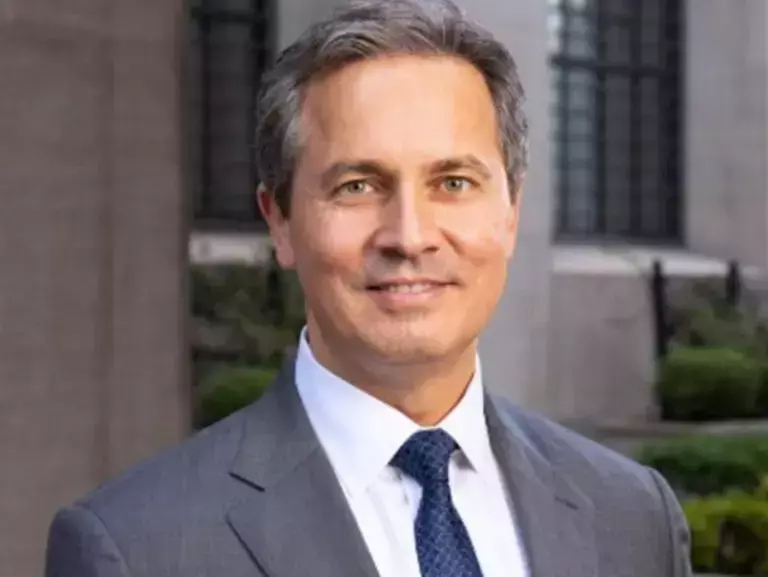
In a recent address, St. Louis Federal Reserve President Alberto Musalem conveyed his conviction that additional tightening of monetary policy is indispensable for steering inflation back towards the central bank's desired objective. He underscored the present robustness of the economy, identifying inflation reduction as the Federal Reserve's foremost priority. Musalem acknowledged that prevailing inflationary pressures necessitate contemplation of further rate increases, while emphasizing his commitment to an open-minded approach in all policy deliberations. He also offered insights into the job market, which he characterized as largely balanced and stable, dispelling notions that its cooling is a prerequisite for inflation control. Furthermore, Musalem pointed to stable market inflation expectations and a lack of questioning regarding the Fed's credibility, attributing rising nominal yields partially to escalating real yields influenced by rate expectations. Despite a generally optimistic outlook, he did flag a potential decrease in consumer enthusiasm.
Federal Reserve Official Signals Need for Further Rate Hikes Amid Strong Economy
St. Louis, MO – On October 8, 2026, St. Louis Federal Reserve President Alberto Musalem articulated a firm stance on the future direction of monetary policy. Speaking on the current economic landscape, Musalem emphasized that the economy is presently operating with considerable strength, and the Federal Reserve's most crucial mandate is to curtail inflation. He pointed out that the prevailing inflation levels necessitate a proactive approach, including considering further increases in interest rates. Musalem, however, assured that he approaches all Federal Open Market Committee meetings with an open and unbiased perspective.
Addressing concerns about the labor market, Musalem described it as generally balanced and stable, indicating that a significant slowdown in employment growth is not required to bring inflation under control. His discussions with business leaders reveal that inflation, rather than employment, is their primary concern. Nevertheless, he acknowledged a potential risk that consumer spending vigor could diminish in the foreseeable future.
Regarding financial markets, Musalem noted that inflation expectations remain firmly anchored, suggesting that market participants largely trust the Fed's commitment to its inflation target. He also explained that the observed rise in nominal yields is, in part, a reflection of increasing real yields, which are themselves influenced by expectations of future interest rate adjustments.
Musalem's remarks position him among the more hawkish members of the Federal Reserve's policy-setting committee. His comments stand in contrast to recent statements from New York Fed President John Williams and Vice Chair Philip Jefferson, who adopted a more cautious tone last week, hinting at a reluctance to implement further rate hikes in the immediate term.
The statements by President Musalem offer a critical perspective on the Federal Reserve's ongoing battle against inflation. His emphasis on continued monetary tightening, even in a strong economic environment, underscores the central bank's dedication to achieving price stability. While some officials may advocate for a more patient approach, Musalem's hawkish outlook suggests that the path to the Fed's inflation target may still involve further decisive actions. This divergence in views within the Fed highlights the complex and often challenging decisions faced by policymakers in navigating the current economic climate, particularly in balancing inflation control with economic growth and labor market stability.