Fashion's Relevance Questioned Amidst Nostalgia and Innovation
The fashion industry stands at a crossroads, grappling with how to maintain its allure and significance in an increasingly complex world. Recent showcases at Paris Fashion Week from prominent houses like Saint Laurent and Louis Vuitton reveal a tension between drawing from historical styles and adapting to current global realities. While some presentations evoked a sense of grandiosity and escapism through luxurious, comfortable designs, others were criticized for an overreliance on past aesthetics, leading to questions about their contemporary appeal and purpose. This critical moment calls for a reevaluation of what defines fashion's impact and how it can truly resonate with consumers beyond mere spectacle.
A notable counterpoint emerged in the form of a posthumous exhibition celebrating the visionary work of Virgil Abloh. This immersive display offered a vibrant and dynamic experience, showcasing his innovative spirit and deep connection to modern culture. The enthusiastic public response to Abloh's exhibition, marked by bustling crowds and rapid merchandise sales, suggests that authenticity, a willingness to experiment, and an engagement with contemporary life are crucial for fashion's continued vitality. This stark contrast highlights the challenge for traditional luxury brands to move beyond mere fantasy and cultivate a more urgent and relatable dialogue with their audience.
Saint Laurent's Archival Homage and the Quest for Modernity
The latest Saint Laurent presentation at Paris Fashion Week unfolded with an elaborate spectacle, featuring a meticulously crafted garden adorned with thousands of white hydrangeas, forming the iconic YSL emblem against the backdrop of the Eiffel Tower. Guests, including Madonna, gathered amidst this picturesque setting to witness a collection that delved deep into the brand's heritage, particularly the opulent styles of the 1970s and early 1980s. The runway showcased pieces defined by exaggerated leather, pronounced shoulders, voluminous white blouses, sharp stilettos, and sleek shades, culminating in a series of evening gowns with dramatic ruffles, puffed sleeves, empire waists, and billowing trains crafted from parachute nylon. This nostalgic journey aimed to recapture a bygone era of elegance and a subtle blend of fetish-inspired designs.
Despite the grandeur and the star-studded attendance, the collection sparked a crucial debate about its contemporary relevance. Critics observed that the reinterpretation of these historical elements, once deemed avant-garde, now risked appearing anachronistic in a rapidly evolving fashion landscape. The reliance on established formulas, even with lavish staging, raised questions about the originality and forward-thinking nature of the designs. While the finale with its energetic, voluminous gowns offered a moment of updated dynamism, the overall sentiment was that simply revisiting past glories might not be sufficient to captivate a modern audience increasingly aware of global anxieties and seeking more immediate, relatable expressions from the fashion world. The show underscored a broader industry challenge: balancing reverence for heritage with the imperative to innovate and connect with present-day sensibilities.
Louis Vuitton and Virgil Abloh: Divergent Paths to Relevance
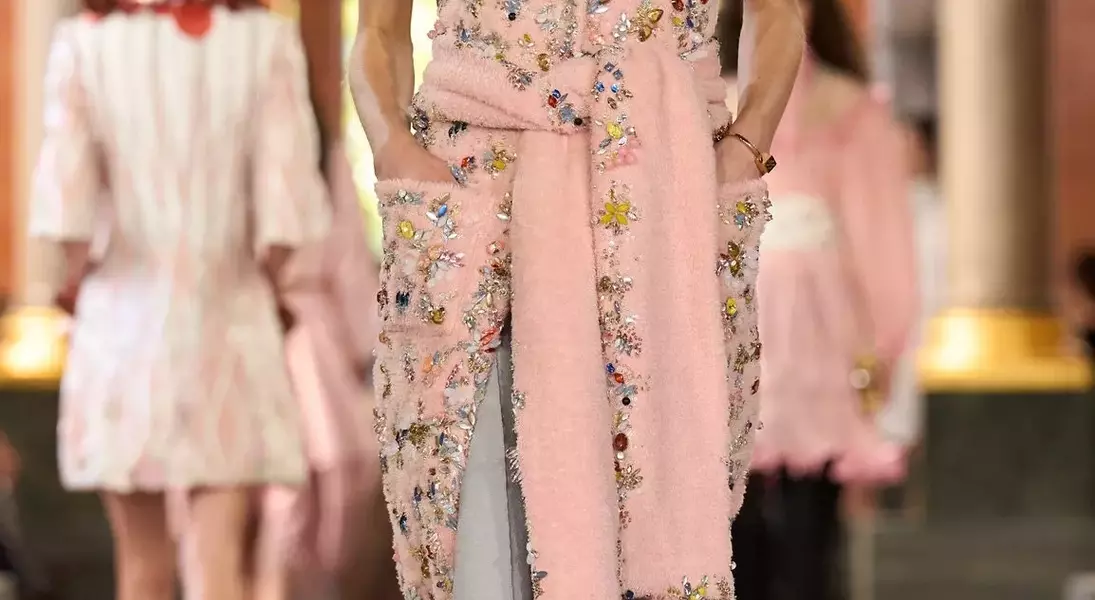
In a contrasting approach, Louis Vuitton's artistic director, Nicolas Ghesquière, opted for a show steeped in historical opulence, held within the private chambers of Anne of Austria at the Louvre. This setting provided the backdrop for a collection that presented a vision of ultra-luxurious loungewear, seemingly designed for opulent domestic retreat. The garments featured exceptionally soft bathrobe coats layered over equally plush suiting, with even the corsetry ingeniously crafted from soft knits. Flowing onesies paired with turban-like head wraps evoked an image of post-bath comfort, while crystal-embellished wraps, initially appearing as shearling, were revealed to be silk meticulously brushed to achieve a fur-like texture. Even the footwear, consisting of tapestry slippers and soft lace-ups, emphasized an overarching theme of comfort and luxurious seclusion, proposing an escape from the world's harsh realities into a haven of refined ease.
In stark contrast to these established luxury narratives, the concurrent exhibition, \"Virgil Abloh: The Codes,\" offered a fresh perspective on fashion's engagement with culture. Organized by Virgil Abloh Securities, this immersive showcase reconstructed Abloh's creative universe, from his Louis Vuitton office replete with DJ equipment to his extensive collection of Nike sneakers and collaborative art. The exhibition pulsated with an almost palpable energy, embodying Abloh's philosophy of continuous experimentation and boundary-pushing. Its opening during Fashion Week, though coincidental, proved serendipitous, drawing immense public interest and rapid sales of Abloh-related merchandise. The success of this pop-up, countering prevailing notions of retail's decline, underscored the profound impact of Abloh's vision, demonstrating that a deep connection to contemporary thought, a spirit of constant evolution, and a genuine enthusiasm for creative exploration are vital ingredients for fashion to remain compelling and resonant in the modern era.